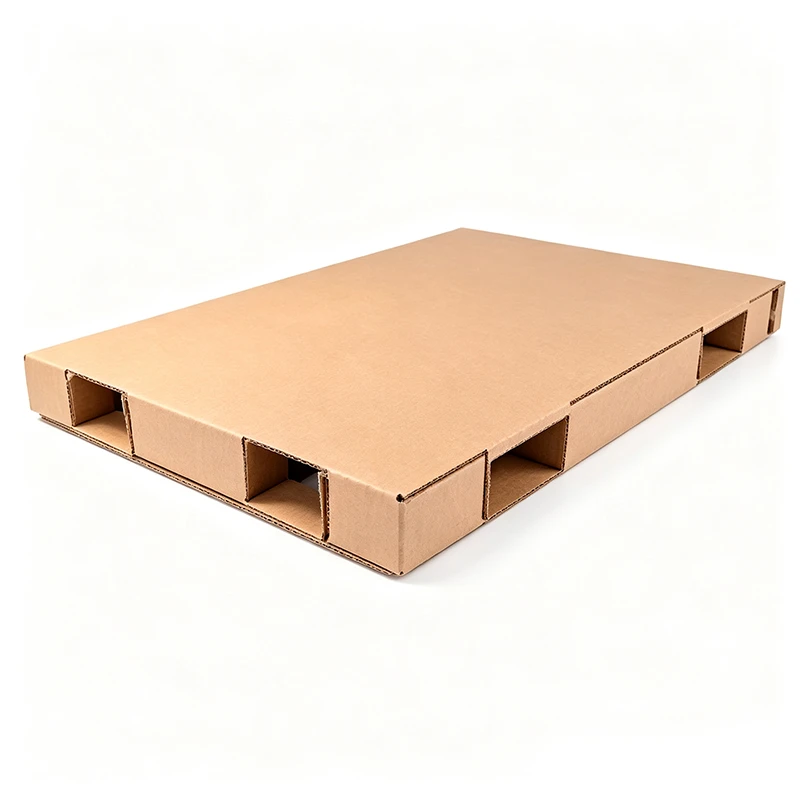
The thickness of corrugated cardboard boxes primarily depends on the number of layers, the flute profile, and the specifications of the base paper. Common corrugated cardboard structures include three-layer, five-layer, and seven-layer structures. Three-layer corrugated cardboard typically consists of one layer of corrugated core paper and two layers of face paper, with an overall thickness of approximately 2.5–4 mm, suitable for lightweight goods such as clothing, daily necessities, and small electronic products. Five-layer corrugated cardboard consists of two layers of corrugated core paper and three layers of face paper, with a thickness typically of approximately 5–7 mm. It offers good compression resistance and cushioning properties, suitable for products requiring a certain load-bearing capacity, such as household appliances, food, and machinery parts. Seven-layer corrugated cardboard has even higher structural strength, with a thickness typically of approximately 8–12 mm, mainly used for packaging heavier, larger, or products transported in complex environments.
Besides the number of layers, the flute profile also affects the actual thickness of the box. Common flute types include A-flute, B-flute, C-flute, E-flute, and F-flute. A-flute has a greater height, offering better cushioning and compression resistance; B-flute is relatively thinner, providing better planar strength and printability; C-flute strikes a good balance between cushioning and thickness; E-flute and F-flute are finer micro-flutes with less thickness and a smoother surface, making them suitable for color printing packaging where high print quality and appearance are required. In actual production, different flute types can be combined, such as using a double-flute structure to increase box strength. Therefore, the thickness of corrugated boxes is not necessarily better the thicker it is; it needs to be determined comprehensively based on product weight, transportation distance, stacking height, compression resistance requirements, and cost, to meet protective performance while avoiding material waste.