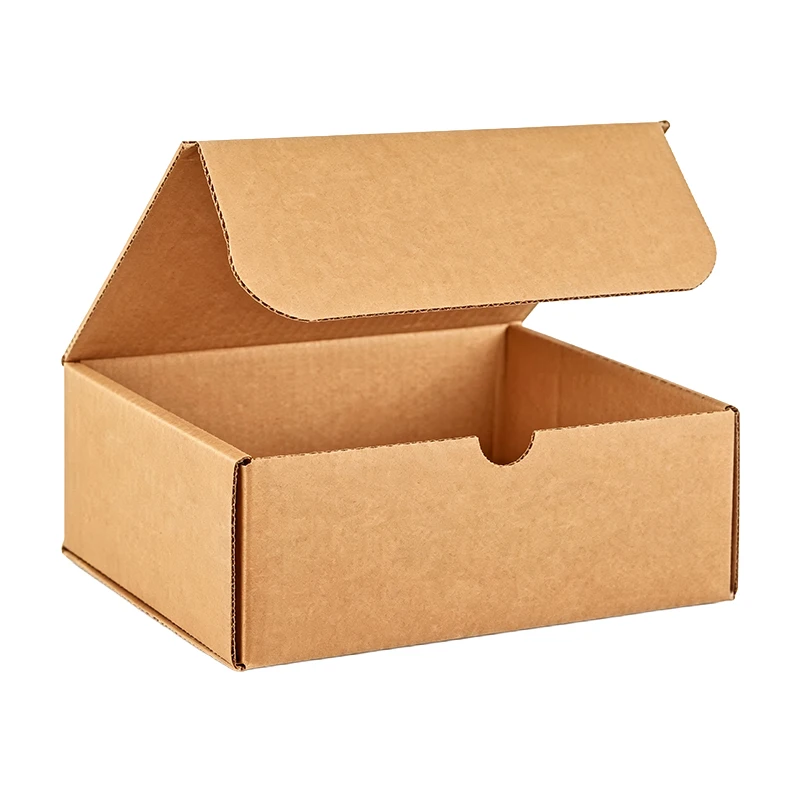
Corrugated cardboard boxes are lightweight, high-strength, provide good cushioning, and are relatively inexpensive, making them a widely used packaging material. Corrugated cardboard, through the combination of face paper, core paper, and corrugated structure, provides structural support, effectively withstanding the pressure generated during transportation and stacking, while also offering cushioning and protection for the product. Compared to traditional packaging such as wooden crates and metal boxes, corrugated cardboard boxes are lighter, reducing packaging weight and transportation costs. Furthermore, they can be customized according to the product's size, shape, and weight, offering high adaptability. In the production process, corrugated cardboard boxes are easy to process and quick to form. They can be created into different box shapes through cutting, creasing, slotting, and gluing processes to meet the packaging needs of various products.
Corrugated cardboard boxes also offer advantages such as good printability, convenient storage, and environmental friendliness. The surface of the boxes is well-suited for color printing, allowing for the printing of brand logos, product images, instructions for use, shipping markings, etc., serving both product protection and promotional and informational purposes. Cardboard boxes can be folded and stored in their unformed state, taking up less space and facilitating bulk storage and transportation for businesses. Since corrugated cardboard boxes are primarily made of paper, they can be sorted, recycled, and reused after use, making them more aligned with green packaging development requirements compared to some difficult-to-recycle single-use packaging materials. Furthermore, the specifications and structure of corrugated cardboard boxes can be flexibly adjusted. By optimizing cardboard thickness, flute type, and box structure, material consumption can be reduced while maintaining packaging strength. Therefore, corrugated packaging boxes achieve a good balance in terms of product protection, transportation efficiency, production costs, appearance, and environmental recycling.